
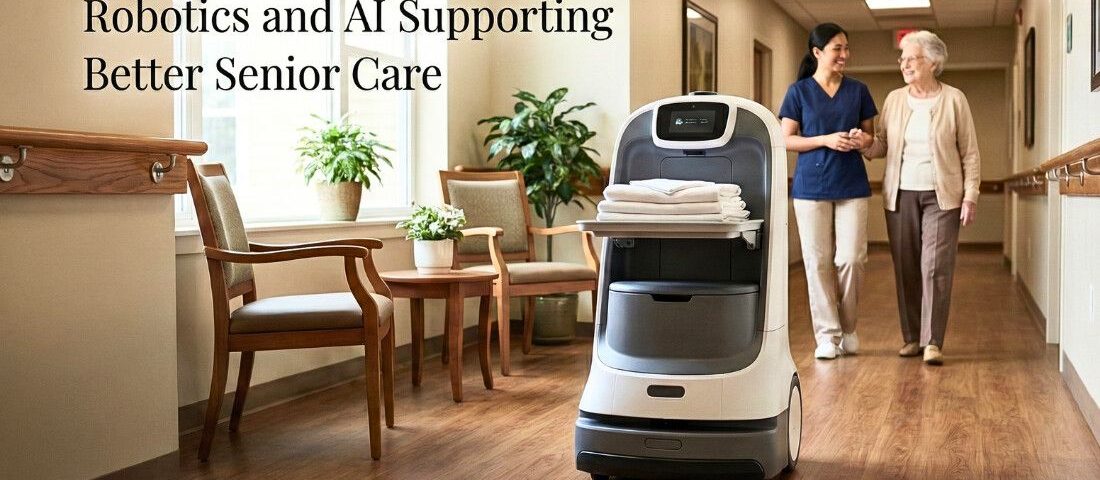
Every day, senior care teams face growing challenges. Staffing shortages, endless paperwork, and increasingly complex resident needs leave little room for error. Technology is stepping in as a solution, not a gimmick.
AI and robotics are helping care communities work smarter and safer. Once considered a “nice-to-have,” these tools are now essential. They streamline operations, reduce burnout, and improve care delivery. Most importantly, they support rather than replace the human connection at the heart of quality senior care.
The Shift in Senior Care Technology
Earlier technology waves emphasized features and novelty. Many systems promised transformation, but often introduced friction instead. Staff struggled with training, leaders faced integration issues, and outcomes were difficult to measure.
That tolerance no longer exists.
Labor shortages, tighter regulatory oversight, and higher family expectations have turned inefficiency into risk. Senior care communities now evaluate technology through a practical lens:
- Does it reduce risk?
- Does it save staff time?
- Does it improve consistency across shifts and sites?
The goal is no longer transformation. It’s stability. Communities now prioritize technology for fit, seamless workflow integration, and measurable impact.
Enhancing Care Through AI
People often misread AI as a replacement for human judgment. In reality, it removes friction. It filters noise, surfaces risks earlier, and gives staff more time with residents.
In practice, AI supports care teams by:
- Flagging early changes in movement, sleep, or appetite
- Balancing workloads to reduce burnout
- Cutting documentation time so staff stay present on the floor
Care decisions stay human. AI provides a signal, not answers, strengthening judgment rather than replacing it.
Workload Relief with Robotics
Robotics in senior care supports physical tasks rather than replacing caregivers. Their value shows up in consistency, safety, and reduced strain.
In day-to-day operations, staff use robotics to:
- Handle logistics by moving meals, linens, and supplies, easing physical fatigue
- Support environmental services through autonomous cleaning that strengthens infection control, even after hours
- Improve mobility support with lifting and transfer tools that protect both residents and staff
With clear purpose and training, robotics fit into daily workflows. They boost safety and efficiency without disrupting human relationships.
Safer and More Personalized Care
Safety in senior care comes from consistent practices. Missed checks, delayed responses, and minor deviations increase risk over time.
Automation helps by:
- Alerting staff early when residents may need attention
- Reminding caregivers of medications, wellness checks, and daily routines
- Maintaining predictable care even during staffing shifts
AI also enables personalized care. Tracking sleep patterns, activity, and appetite helps staff intervene sooner and tailor care to each resident’s needs.
Peace of Mind for Families
Families feel confident when communities use technology thoughtfully:
- Evidence-based updates deliver clear, data-backed insights instead of vague reports
- Continuous security through fall detection and vital-sign monitoring adds an extra layer of protection
- Building trust by showing residents are safe and well cared for
Debunking AI Misconceptions
AI in senior care often sparks concern, but most of those concerns stem from misunderstandings of its purpose and capabilities. Here’s what leaders and families should know:
Misconception: AI will replace caregivers.
Reality: AI supports staff by handling repetitive tasks so that caregivers can spend more time with residents.
Misconception: AI makes decisions on its own.
Reality: Humans remain in control. AI provides insights and context to help staff make faster, more informed decisions.
Misconception: AI threatens resident privacy.
Reality: Modern AI platforms use encrypted storage, secure networks, and strict access controls. Only authorized staff can access sensitive data.
Misconception: AI is too complex to use effectively.
Reality: Today’s systems integrate with daily workflows and include intuitive, practical training for staff.
Misconception: AI reduces human connection.
Reality: By cutting administrative burden and burnout, AI lets staff focus on meaningful, personal interactions with residents.
Choosing the Right AI and Robotics Tools
Successful adoption starts with thoughtful implementation. Leaders should ask:
- Integration: Does it fit seamlessly with existing systems?
- Adoption: Is training manageable and built into daily workflows?
- Measurability: Can staff track outcomes, such as fewer falls, improved efficiency, or lower turnover?
Technology without a clear, measurable impact is a risk, not a solution.
FAQ: Robotics and AI in Senior Care
Will AI make care feel less personal?
Automation reduces repetitive tasks, allowing staff to spend more quality time with residents.
How does AI improve safety without invading privacy?
Many sensors use thermal imaging or radar rather than cameras, ensuring privacy while monitoring 24/7.
Do these tools solve staffing shortages?
They act as a “force multiplier,” helping smaller teams provide high-quality care without burnout.
Is the technology complex for older staff to learn?
Modern tools have “invisible” interfaces that fit naturally into existing workflows.
How is ROI measured?
Focus on risk reduction (fewer falls), operational efficiency (hours saved), and staff retention (lower turnover).
Transform Care with AI and Robotics
AI and robotics aren’t gimmicks. They make care safer, more consistent, and more personal.
Canopy Senior Living helps communities implement technology that fits workflows, strengthens human connections, and delivers measurable results.
Work smarter and enhance care today. Contact Canopy Senior Living.