
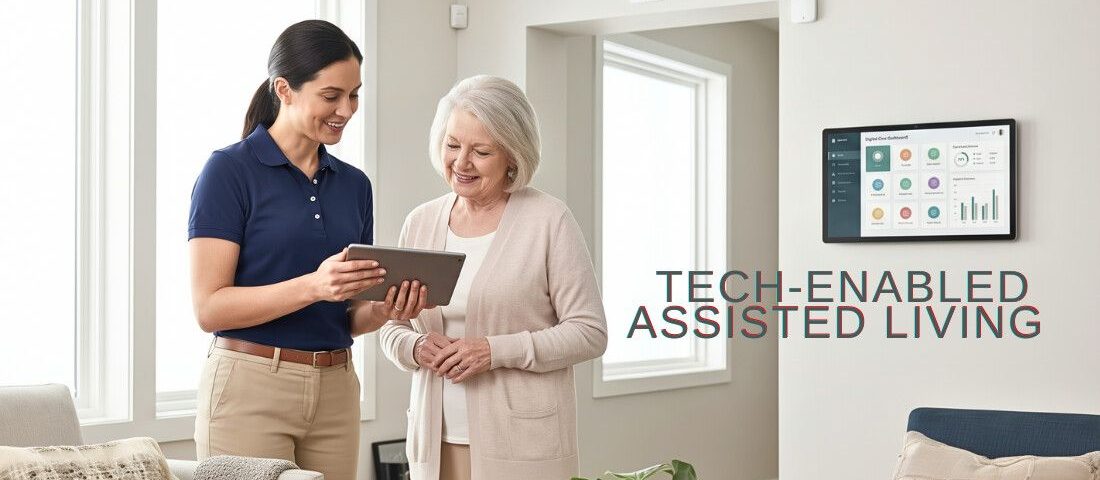
In assisted living, technology now supports everyday care. Call systems, electronic records, and safety monitoring function as standard tools rather than optional add-ons. Care teams now use these tools with greater intention and purpose.
Families want confidence that their loved ones are safe and well supported. Staff need systems that reduce workload, improve consistency, and prevent burnout. Operators need solutions that help them retain staff and deliver dependable care.
Tech-enabled assisted living is not about adding more devices. It’s about using technology to remove friction, support caregivers, and protect the human side of care.
Defining Tech-Enabled Care
Being tech-enabled doesn’t mean adding more systems for the sake of innovation. When technology lacks purpose, it can create problems. The best communities use technology to let staff focus on residents.
- Technology with Intent: Tools should reinforce how teams already work, instead of forcing new habits or unnecessary steps.
- Invisible Integration: By aligning with daily workflows, technology consistently supports care in the background.
- Strong Leadership: Clear expectations, training, and accountability ensure technology strengthens operations rather than distracting from care.
Solving the Staffing Challenge
Staffing is the most formidable challenge in senior care. High turnover and burnout often come from friction. Endless administrative tasks, complicated schedules, and scattered communication steal time from residents.
Tech-enabled communities treat technology as a capacity multiplier. Automating documentation, simplifying coordination, and centralizing communication free up staff time to focus on the human side of care.
When done right, technology enhances care and makes it more meaningful. Adoption should not be about novelty. Aim for necessity, efficiency, and creating an environment where caregivers can thrive.
Safety Through Consistency
In senior living, safety is rarely about constant monitoring. It comes from reliable routines. Missed checks or delayed responses are what create risk over time.
Innovative systems do not replace human judgment. They reinforce it. Early-alert tools and automated reminders help teams spot subtle changes in residents’ health sooner. They prove especially valuable during busy periods when staff handle heavy workloads.
Most importantly, technology supports care with dignity. It works quietly in the background, keeping residents feeling at home rather than in a clinic.
From Reactive to Proactive Care
Leadership decisions are only as strong as the data behind them. Too often, information is fragmented, trapped in paper logs or isolated software systems.
A tech-enabled framework connects these dots. Operational data highlights staffing gaps, workflow bottlenecks, and early signs of health changes before they turn into crises.
Technology does not replace human judgment. It provides context, giving leaders and caregivers clear, real-time insights to make smarter, faster decisions.
Creating a Smoother Resident Experience
Residents and families rarely notice the software a community uses. What they do notice is responsiveness, attention, and presence.
- Personalized Care: Data-backed care plans allow staff to anticipate needs and tailor support for each resident.
- Stronger Connections: Streamlined communication keeps families informed and reduces anxiety.
- Meaningful Engagement: When staff spend less time on paperwork, their interactions with residents become more attentive.
The result is a resident experience that feels effortless, supportive, and genuinely human.
Choosing the Right Technology
Moving to a tech-enabled model requires focus and discipline. Operators should consider these key questions before adopting new tools:
- Problem First: What specific challenge or inefficiency is this tool designed to solve?
- Integration: Will it work seamlessly with existing systems, or create another isolated silo?
- Practical Training: Can staff realistically learn and use this tool without adding stress to an already busy day?
- Data Security: Does the tool meet privacy and HIPAA requirements?
- Ongoing Support: Is vendor support reliable, and are updates and maintenance handled smoothly?
Asking these questions upfront ensures that technology enhances care rather than adds complexity.
Tech-Enabled Assisted Living FAQs
Does “tech-enabled” mean fewer staff on-site?
No. Technology supports staff, not replaces. It automates repetitive tasks, giving caregivers more time with residents.
How does it protect resident privacy?
Privacy and dignity come first. Non-intrusive sensors provide safety data without cameras. Secure, HIPAA-compliant platforms store all information.
Will the community feel too clinical?
No. When appropriately integrated, technology stays in the background. Silent alerts, automated lighting, and digital check-ins reduce clutter.
How do staff manage the learning curve?
Modern systems feel intuitive and familiar. Practical training and ongoing support help staff use technology to reduce their daily workload rather than add to it.
How does it improve care?
Tech-enabled systems detect subtle changes in sleep, mobility, or behavior, allowing the team to intervene early. This proactive approach helps prevent emergencies.
Technology That Works for People
The future of senior care isn’t about gadgets. It’s about using technology to strengthen operations, support caregivers, and give staff more time with residents.
At Canopy Senior Living, we help operators align technology, operations, and strategy. When systems serve people, tech-enabled care becomes reliable, sustainable, and truly human-centered.
Contact us today to learn how we can help your community build the future of senior living.